Every once in a while, I will remind my friends when we are out and about that we have access to different discounts and rewards programs.
What they have to offer changes frequently, so it’s worth checking out prior to any big purchases.
Keep in mind that I am an OCT with ETFO, so if you belong to a different licensing body or union, then accessibility to the following rewards programs may be limited. I’m also based in Ottawa, so may be unaware of discounts offered in your region. I’ll update this post if I uncover more or if people send them my way.
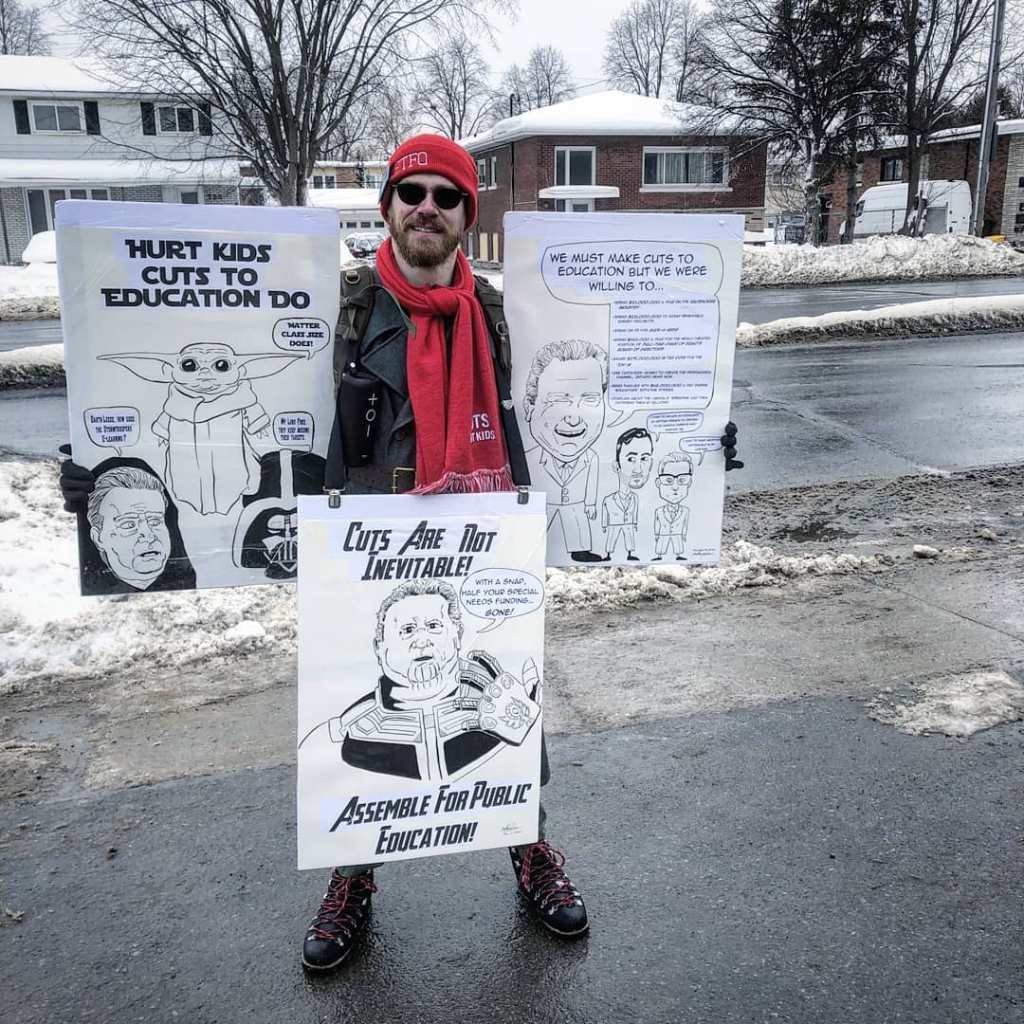
The author on the streets of Ottawa (February 2021). I drew a different sign for each day of picketing.
Education unions went on strike with votes taking place in 2019 and picketing happening over much of the province in 2020, up until the COVID pandemic shuttered the province. Ford, and his education minister, Stephen Lecce, were in full combat mode. Cuts were felt across the entire education system, with the system straining to keep up with the needs of its students. The status quo was maintained when the strike was over.
Section 33 was first invoked in the 1980s. Ontario, under Doug Ford, first flirted with using the Notwithstanding Clause in 2018 after it came into power. Ford wanted to settle some old scores and tamper with Toronto’s city council. Ultimately it wasn’t use. In 2019, Quebec used it (they were the first to invoke it in the 80s) to prevent religious symbols from being worn in public by public servants. This change in Quebec’s laws directly impacted hijabi teachers, and jobs were lost as a result. Boldened by Quebec’s success, the Ford government used it to increase individual political campaign donations in 2021.
Coming off another majority, but failing to get most Ontarians to vote, Ford is once more facing the ire of education workers and educators. Inflation has caused housing, food, and everything else to skyrocket in price. Guess what didn’t move up with inflation? Salaries in education. Workers are facing less support in schools, thanks to endless austerity cuts, despite the province posting a surplus. They are increasingly expected to live in poverty and make use of foodbanks.
Do all these links paint a vivid enough picture yet? They should and it is bleak.
What can you do? Pressure your PC MPPs. Join a picketing location near you. Donate grocery gift cards to those protesting. Push your unions and non-PC MPPs to aim for a general strike. We can stop these attacks by working together.
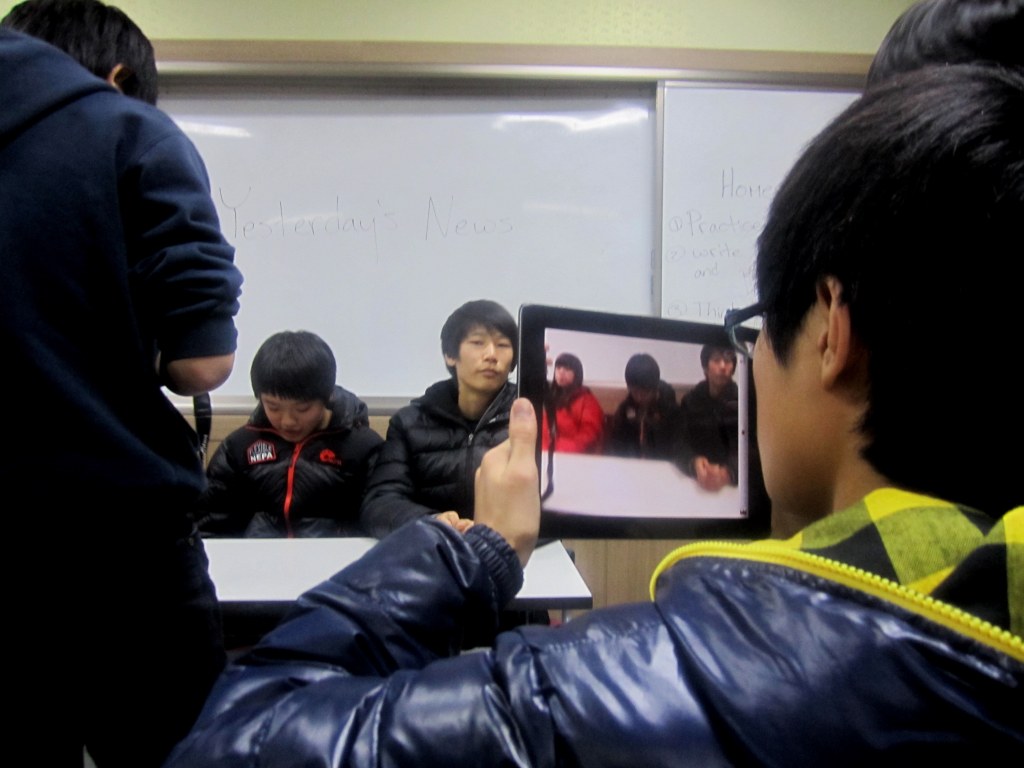
Students in Gangneung prepare to shoot a news segment for their English camp.
When I taught in Daegu and Gangneung, I would encourage the students to create multimedia content. It was a way for the students to use their language abilities in an unorthodox way and pick up a practical skill. More often than not, this looked like video creation. In Daegu, I was learning the ropes when it came to making videos. Video editing for the purposes of maintaining a YouTube channel was in its infancy back then (in fact, I started on the now defunct Google Video service). There was a lot of learning on the fly, but the students and I mostly filmed short comedic skits.
By the time I moved to Gangneung in 2010, YouTube had picked up momentum. Vlogging had taken over blogging and creating your own YouTube channel was all the rage. My students (the Ontario equivalent of grades 7, 8, and 9) joined me in various initiatives. I ran after-school English clubs, as well as seasonal camps, which were free for the students to attend. As long as the students used English, I was completely free to determine the content of these extra curriculars. They soon became multimedia creation sessions with video shooting and editing being the primary focus.
It was genuinely cool. The students were pumped to learn how to create videos, from the scripting process to basic direction and even postproduction. It became a big enough thing that the school eventually made me the videographer for important events. I’d film the festivals and host them on my YouTube channels so parents could watch. They had me go on different field trips so I could make a video of the excursion. They’d use the videos for committee meetings and meet-the-teachers nights at the start of the school year.
When I returned to Canada, I wanted to create a similar project. I wanted to create a cadre of student reporters that would essentially be a self-contained news team. Unlike Korea, it can be very difficult starting off as a new teacher in Ontario. It takes forever to become permanent, which often means you are switching schools too frequently to start a project like this.
Three years ago, I managed to get a video club off the ground at the elementary school I did most of my substitute teaching at (called supply teaching here). The students and I learned how to shoot short videos and edit them. We managed to create content for a school concert while the different acts got organized in the background. It proved successful but then the pandemic struck, and I switched schools the following September.
The pandemic is still very much a reality; however, I am back at the same school. Once we were able to create clubs again, I wasted no time in setting up my latest project. The students who had joined my previous video editing club several years back wanted to know if I would be starting it up again. I would, but with an expanded focus.
This time it would be a press corps. It’s currently open to grade 7 and 8 students and they’ve been busy. One of our tasks is to create content for the school’s website which hadn’t been updated in a very long time. Student reporters are now setting up interviews with staff and different classes. They are shooting and editing videos. They are drafting interview questions and learning how to direct a video shoot. They are observing events and writing articles. They are creating graphics to use as banners and inserts. It has been really cool!
I was able to preload a lot of these skills with the students, because for many of them I’ve been teaching Drama using filmmaking as the hook. They’ve learned how to create scripts for short videos, how to shoot a video on a Chromebook using blocking strategies, and they gotten used to some basic editing. They’ve been able to bring those skills into staff interviews and it has paid off.
It’s still in the early stages and we are learning as we go but here are some of the logistics:
-We currently meet in person once a week. During this time, we pitch story ideas, go over any progress or updates, and collaborate to create the next pieces.
-I have set up a Google Classroom to use as reservoir for updates for when we need to communicate something to each other. Each piece we are working on is an assignment that links to the shared drive.
-I set up a shared Google Drive between all the students. That way they can dump all the files into the appropriate folders. They all have access through their school email addresses.
-I created a YouTube channel for our video content. Originally, I was just going to keep the uploads to Google Drive and change the privacy settings, but playback was an issue. Nearly any device can access YouTube so that solved the issues I was having.
-I created a Google Site that can serve as a public archive for our pieces. Eventually things will be bumped off the school’s website and I didn’t want the students to lose all their hard work. Anything we post to the website is mirrored on the Google Site. It’s also a good way to share pieces with those who need to vet stuff before it goes live on the school’s website.
-The students have agreed to a code of ethics I drafted. This includes using technology appropriately.
-The students are learning by making mistakes. I’m keeping a pretty tight grip on things but eventually the students will gradually take over most aspects of the press corps and assume responsibility. The grade 7 students from this year can then become the leaders for next year (hopefully I am at the same school).
While the students are picking up all these new skills, my hope is that they find them useful going forward in their lives. Media literacy is a big stickler for me during this age of misinformation and disinformation. Getting students interested in journalism and reporting will hopefully set them up for success in decoding much of what is being consumed online. Getting a foot in the door when it comes to photography and videography before entering high school can also have its advantages. Having their writing published can also spark growth in different rewarding creative venues. Ultimately, though, it’s a way to rebuild connections between different parts of the school community that have been sequestered during the pandemic.


 Haligowan
You must be logged in to post a comment.